
Book five in the Super AI Engineering Series
The team was slower than one.
The demo had five agents and a diagram. Then the bill arrived, two agents repeated each other's work, one wrong claim became a fact by the third hand-off, and nobody could say which agent had gone wrong. This is a guide to deciding whether a team earns its place, and to running it when it does: 25 chapters, 125 illustrations, not a single line of code.
PDF + EPUB · or sample Chapter 1 first, no signup
Instant download · 7-day money-back guarantee
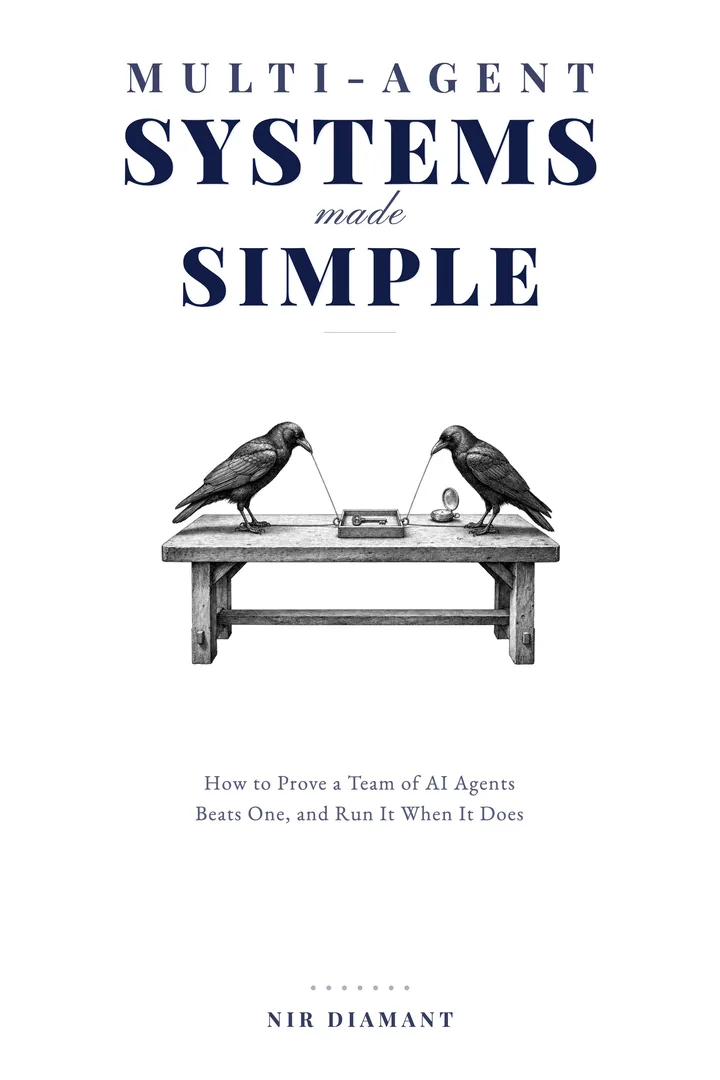
A team is justified by the single agent it beats.
The book opens on an ordinary failure. A planner splits a feature into four tasks, three coding agents take one each in parallel, and a reviewer approves their short summaries. The tests fail, because one agent renamed a function another was still calling. Given the same job and the same total allowance, a single agent finishes in one session. Most teams are built before anyone checks whether one agent would have done the job. This book teaches that check, then how to shape, run and watch the team that passes it.
Every pattern, the same four questions
A pattern that cannot say when it is unnecessary is selling something. The fourth question is the one that earns the book its place.
How does it work?
The mechanism, described as a process you could build in any language.
What breaks?
The failures you will actually meet, each with the symptom you will see first.
What does it cost?
Latency, tokens and money, complexity, and the risk of running it, given as a direction and a method to measure, not a number to copy.
When is it overkill?
The verdict, and the simpler thing to try first. Many chapters conclude that you do not need the pattern, and say so.
In your coding agent. Its helpers, parallel sessions and reviewer pass are small teams, with a split of work, a handoff, shared files, a summary that hides detail, and a bill. Every chapter shows where its pattern lives in the tool you already use.
Honest about its evidence. Where a claim rests on early research, the chapter says so. It teaches how to measure your own team against a baseline, not numbers to copy, and names no framework, SDK, model or vendor.
25 chapters in seven parts
In the order a team's questions come up: whether to build it, how to shape it, how it communicates, how it is bounded, how it works together, how it is understood, and how it is kept safe and affordable.
Part I
Prove the Split
The control run, the measured cost of coordination, and re-deciding at every model upgrade.
- 1The One-Agent Baseline (free)
- 2What Coordination Costs, Measured
- 3Re-Running the Decision at Every Model Upgrade
Part II
Shapes and Errors
Chain, hub, mesh and hierarchy; how errors travel; who owns the hard problem; and what waiting does.
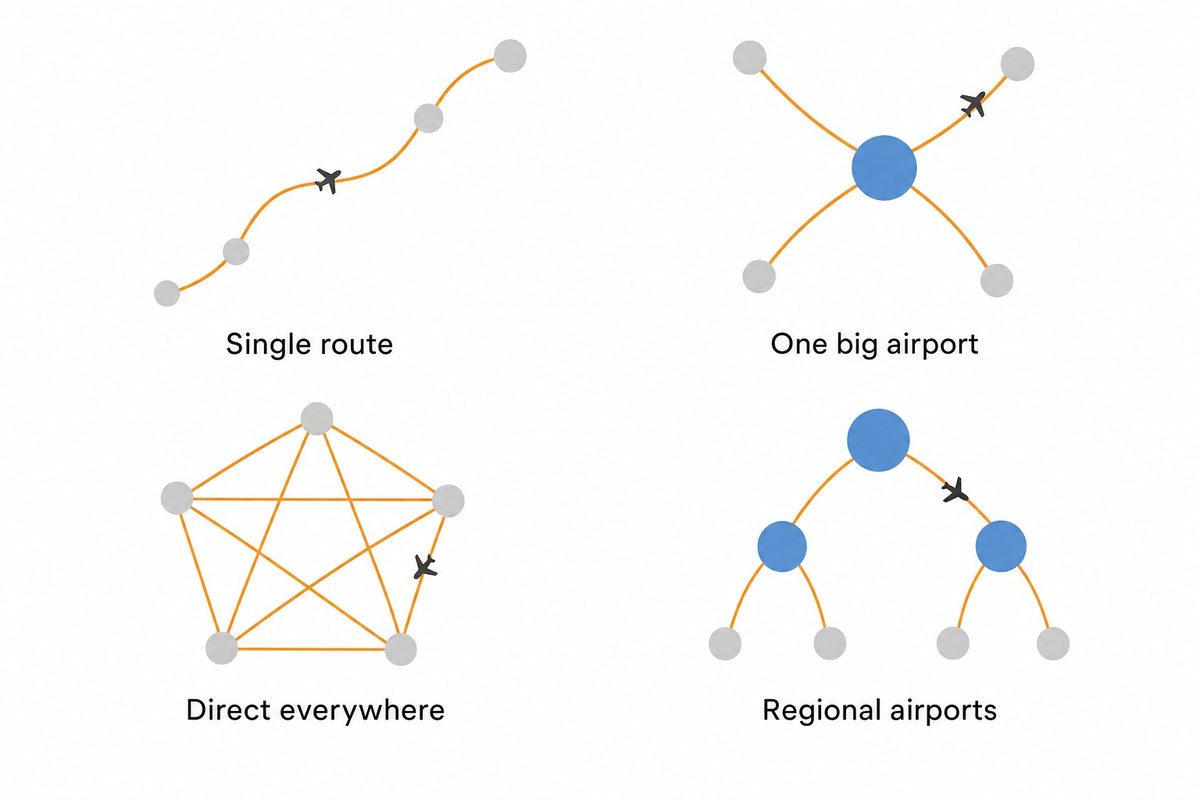
- 4Four Shapes: Chain, Hub, Mesh, Hierarchy
- 5How Errors Spread Through a Topology
- 6Flat Peers and the Problem Nobody Owns
- 7Planner, Worker, Judge
- 8Waiting: Synchronous and Asynchronous
Part III
Talking and Remembering
Contracts, trace or summary, shared state under concurrency, context budgets, and runs that outlive a failure.
- 9Contracts Between Agents
- 10Sharing the Trace or Sharing the Summary
- 11Shared State Under Concurrency
- 12Context Budgets Across a Team
- 13Runs That Outlive a Failure
Part IV
Boundaries and Trust
Who is acting for whom, and what to build on when protocols keep changing.
- 14Who Is Acting for Whom
- 15Protocol Churn and What to Build On
Part V
Working Together
Verifiers that verify, advisors, and vetoes.
- 16Verifiers That Actually Verify
- 17The Strong Advisor and the Cheap Worker
- 18Vetoes and Adversarial Roles
Part VI
Seeing What Happened
How teams fail, which agent and which step, team evals, and tracing across agents.
- 19A Field Guide to How Teams Fail
- 20Which Agent, Which Step
- 21Evals for a Team
- 22Tracing a Run Across Agents
Part VII
Danger, Money and Shipping
Injection between agents, trust that does not compose, and the bill and the kill switch.
- 23Injection Between Agents
- 24Trust Does Not Compose
- 25The Bill, the Kill Switch and the Honest Verdict
Around the parts
Introduction and appendices
Why a team so often loses to one agent, then a decision tree from your problem to a team shape, or to no team, with a checklist before launch and every term defined.
- Introduction: The Team That Was Slower Than One
- Appendix A: Choosing a Team Shape
- Appendix B: Glossary
125 illustrations. Here are four.
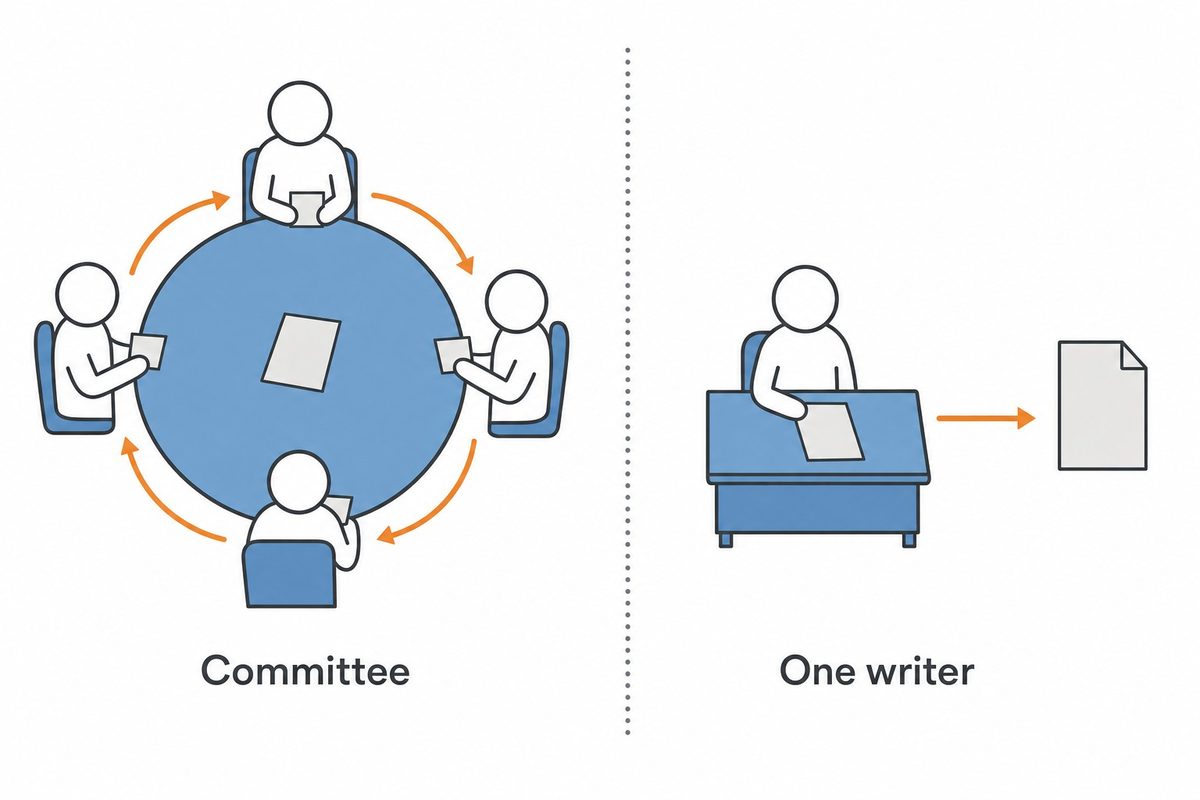
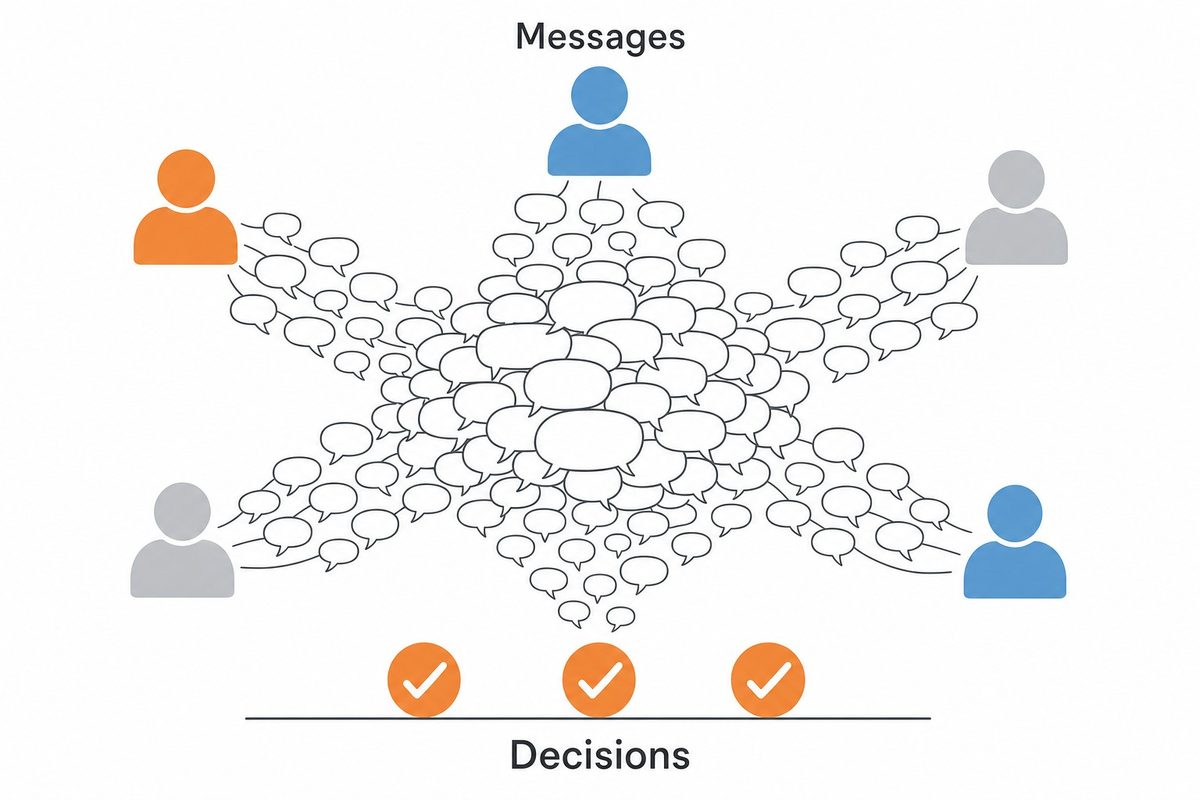
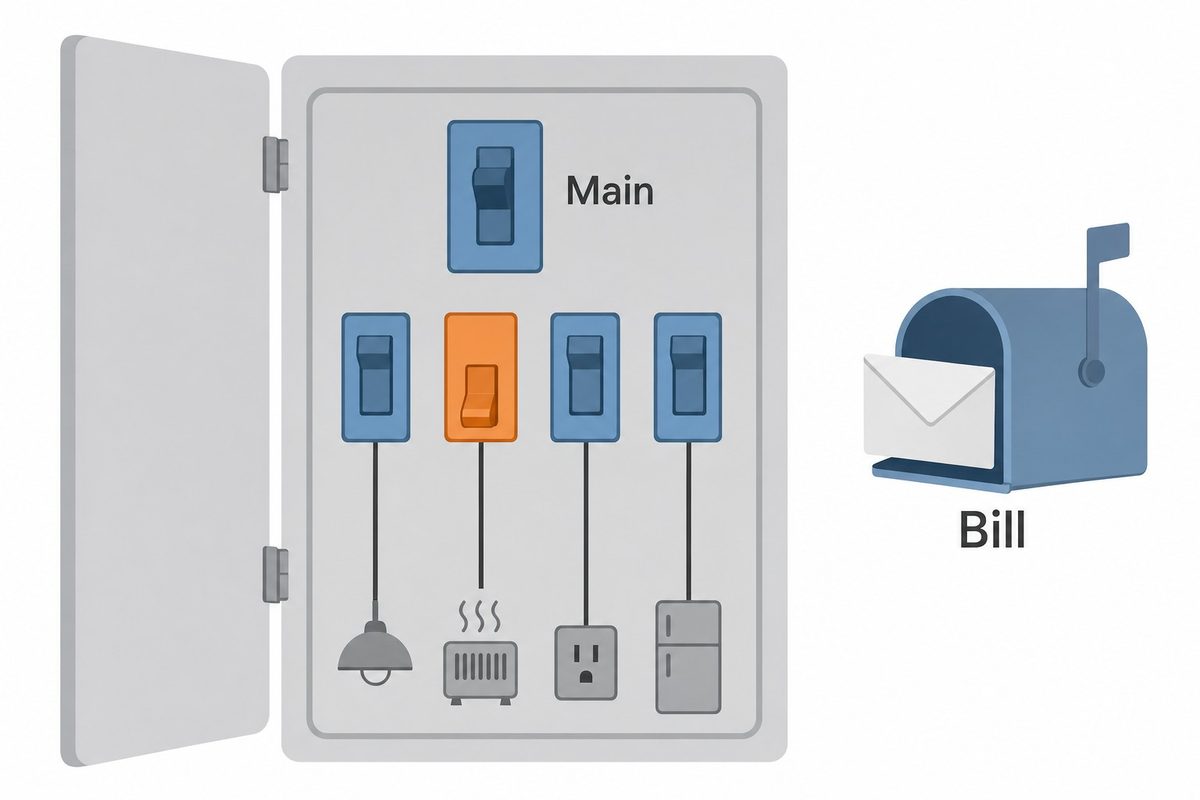
Every chapter opens with a problem and one everyday analogy that carries the idea, and the analogy is drawn. These four come from the introduction and Chapters 2, 4 and 25.
Written for the people who decide whether to build a team
Developers building a team
The control run your team has to beat, the shapes that contain an error, and the traces that show which agent went wrong.
Anyone asked to approve one
What to ask before a team ships: what each pattern buys, what it costs, and when to say no, in terms you can bring to a design review.
Teams with one already running
Start with Part VI to find which agent and which step failed, then return to Part I and compare the team against one agent.
It picks up where the multi-agent chapters of AI Agents Made Simple stop. You need to have called a model from code or watched a coding agent work, and nothing more. If you have never built a single agent, start with that book.
Why this book vs. everything else
| Compared | This Book | Framework docs | Papers | Blog posts |
|---|---|---|---|---|
| No code required | ||||
| Says when a team is overkill | partial | |||
| Tests the team against one agent | partial | |||
| Framework-agnostic | partial | |||
| Illustrated throughout | partial | partial |
What you get
- PDF and EPUB, both included, $59
- Full-color PDF, 359 pages, with live links
- EPUB for any e-reader
- Instant download after checkout
- 7-day money-back guarantee
- 125 custom illustrations across 25 chapters
- No code, and nothing to clone or install
From the author of RAG Made Simple, Agent Memory Made Simple and AI Agents Made Simple
Nir Diamant is an AI researcher and open-source educator. His GitHub repositories have earned over 85,000 stars and draw more than 500,000 views every month. His DiamantAI Newsletter reaches 40,000+ subscribers and ranks in the top 0.1% on Substack.
This is the fifth book in the Super AI Engineering Series. It starts where Chapters 23 to 25 of AI Agents Made Simple stop, on whether a second agent earns its place, orchestrators and workers, and handoffs, and does not reteach them.
Beat one agent first.
Then shape the team so a mistake stops where you can see it. Get the decisions that still hold when the next framework ships.